
OCT 28 2018 | SPENT S1E1 | Tithing Is Not The Lotto
Scripture: Malachi 3:6-12
Malachi 3 contains one of the few places in Scripture where God invites people to test him, and it is about money. Pastor Adam opens the series on giving there, with the uncomfortable framing the passage itself uses, that withholding is described as robbery rather than as prudence.
The message works the history before the application. Abram gives Melchizedek a tenth of everything long before any law requires it, which locates the tithe in gratitude and in the recognition of God's authority rather than in obligation. That matters for the question the message puts directly and then answers carefully: is tithing still required, with Galatians 3 in view, that Christ paid the price to free believers from the curse the law brings.
What Pastor Adam refuses is the transactional reading the title names. Tithing is not the lottery. The floodgates language in Malachi is real, but treating giving as a mechanism for extracting a return inverts the whole thing, since the practice exists to acknowledge that everything was already received.
The closing frame is honour rather than obligation. God is owed thanksgiving and praise, and giving is one of the more concrete ways a person says so with something that costs them.
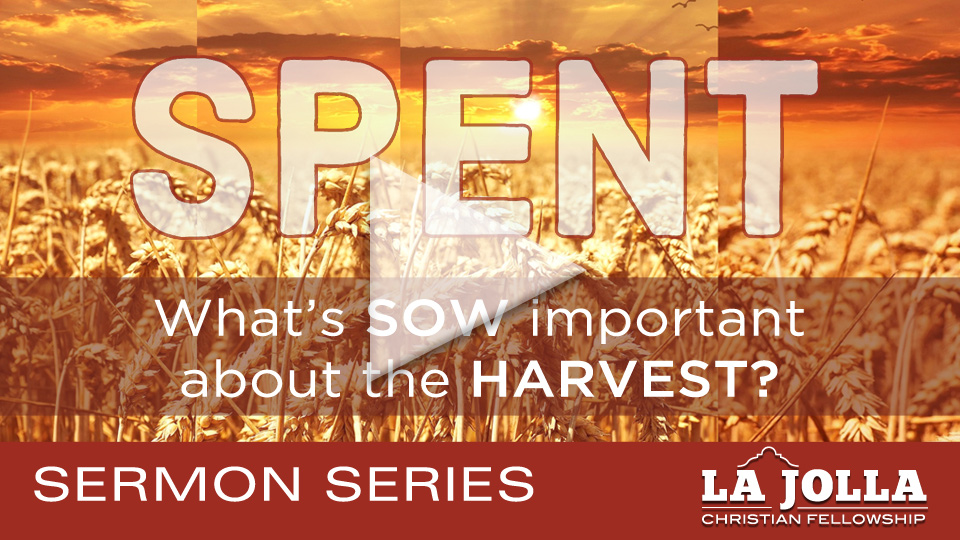
This is the first message in SPENT: What's Sow Important About The Harvest.
Key topics:
- Malachi 3 as the one place God invites a test, and why it concerns money
- Abram and Melchizedek, and the tithe as gratitude before it was law
- Why treating giving as a mechanism for return inverts the practice
Podcast (sermons): Play in new window | Download
Read the Sermon Transcript
Sea Change Church · SPENT · "Tithing Is Not The Lotto" Pastor Adam Stadtmiller · October 28, 2018
Automated transcript. Not reviewed for accuracy.
Malachi chapter 3, verses 6 and following. I, the Lord, do not change, so you, O descendants of Jacob, are not destroyed. Ever since the time of your forefathers, you have turned away from my decrees. You have not kept them. Return to me. And I will return to you, says the Lord Almighty. But you may ask, how are we to return? Well, will a man rob God? Yet you rob me. But you ask, how do we rob you? In tithes and offerings.
So you're under a curse. The whole nation of you, because you're robbing me. Bring the whole tithe into the storehouse, that there may be food in my house. Test me in this, says the Lord Almighty, and see if I will not throw open the floodgates of heaven and pour out so much blessing that you will not have room enough for it. I will prevent pests from devouring your crops. The vines in your fields will not cast down their fruit, says the Lord Almighty.
Then all the nations will call you blessed, and yours will be a delightful land, says the Lord Almighty. Lord, thank you for your word today. And may we find in this and in Pastor Adam's message a word for us, for life. We pray it in Christ's name. Amen. Amen. Thanks, Pastor Jim. That's P. Jim. Big baseball guy. You want to talk baseball? He's your boy. That's it. He knows his stuff. You like going to games with people, too, don't you?
You like going to games with people, too. You like organizing a lot of games. You want to go to Padres game? Sorry, I choked in my throat a little bit right there. My bad. I grew up Padre fan. I'm done. I'm done. I'm done. All right. Let's get into it. One of the most bastardized scriptures in all of the Bible. This scripture has been used inappropriately, in my opinion, for years to compel people to live under the law, to compel people using guilt, using all types of manipulation to fill the coffers, to get people worried about, am I robbing God, and all this over and over again.
It has been used to, I believe, a lot of times, I think a lot of church men have fear. I think they're afraid. Afraid of failing. Afraid of not being able to have food on the table. And so we do whatever we can in order. And sometimes it's greed. I believe there is a lot of greed in the church. There are greedy pastors. But I believe there's a lot of reasons people use this verse. But does that invalidate the verse? Does that invalidate what God's trying to say here?
Let me just start with the overall thought of that this is based on there being a debt to God. And Jesus came and paid the entire debt. And Jesus, it says, that he did not come to destroy the law. So the law is still there. But he did fulfill it. So that you don't have to. Which means that you can be a Christian. You can follow God. You can love God. You can never give a penny, according to what I see scripture saying.
Never give a penny. I'm not saying you're greedy, but you never give a penny. And you can still go to heaven under the blood of Christ. Because he's already fulfilled everything. But is there a blessing? Because we know that God's law is because of a curse. But it also has a blessing that is inherently attached to it. Now, I'm going to mess up some of your theologies. And I know, I mean, I probably do that every week anyways when you listen to me.
But about 10, 15 years ago, I was in Newport Beach. And I was walking past the lotto thing. And big lotto this week, right? I won't ask you to raise your hand if you played the lotto. You know what I mean? And if I was going to buy a lotto ticket, I'm just buying one. I figure there's, you know, I kind of go with this, you know, with God. Not that God would tell me to do it. But with God, it's either 0% or 100%. I don't feel like God's like, I think there's a 72% chance on this.
That this is going to happen in my will for you right now. So I just buy one if I'm going to buy one. So I'm in Newport Beach. And I'm walking by lotto. And I look. And as I'm walking out of the store, I just get this sense in my heart. I look at the thing. I get this sense. And look, you can challenge me on this later. Buy a lotto ticket. And I'm like, oh, I don't really. And it's $2. So I put $2 in there. Because I thought, I'm just going to see if I can follow God.
Whatever. Maybe he's saying something. So not that I needed to win. Not that I care about the lottery. But I put $2 in. And I get this thing out that says, you win $2. I'm like, sweet. Okay. So I went and got my $2. I'm like, that was sweet, God. Cool. And I'm walking out. And then I get this sense. Go buy another one. I'm like, really? And at this time, I just want to go home. You know what I mean? I'm not a gambler.
I hate losing money. I went to the track when I was 18. I got a little bit of money. I lost $5,000 in about seven weeks at the track when I was 18. And that kind of filled me. Yeah, right? It's pretty easy to lose $5,000 at the track. Maybe some of you guys know that. I went to Del Mar. I was all cool because I was 18. So I put $2 back in. And I get another thing. I said, you won $2 again. And I was like, sweet. I've won $2 again.
So I walk over. And I give it to him. And I'm walking out again. And if you do the odds on this, I started counting because it had the odds on the back. And I felt like the Lord said, do it again. And I was like, really? So I put $2 in. This is a true story. And what happens? $2, okay? So I went to the back of the car and did the math. And the chances that you're going to win three $2 things in a row was like X. But it was crazy.
You know what I mean? I should have gone to Vegas that weekend. And then I just felt in my heart like, you're done. And so I went and got my $2. And I walked out with my $2. And I was like, you know, God, what was that all about? You know? And I personally just said, I'm just trying to teach you how to hear me. You know? Now, you can challenge me and say that that wasn't God or whatever. I'm just telling you. The whole point of telling you that story is this.
Tithing and offerings to God is not the lotto. Okay? It's not the lotto. And the whole thing, right? Don't watch cable TV because it's a lot of it. Not all of it. There's a lot of good people doing good things on cable TV. But, like, I'm not going to cry tears during my prayer. Okay? And then say, Adam's tear cloth. If you pray, you know, you give $100, you can get Adam's tear cloth. And I will say, they do that. You know that.
My tears are powerful. What do you, don't mock me, Chris. There's a lot of joy. There's a lot of prosperity in these tears. And I cry a lot. I feel like it's misused. I feel like there's this whole deal. Like, if you give to God, he's going to do this. And so people, I feel like there's, like, these, like, I think it preys upon the poor oftentimes that need hope so bad. I think, you know, I don't see a lot of really rich people who, you know, do that.
I think it's predatory upon the poor, I think, often. Here's the problem, though. I think God honors his word. So the problem is, is you have people that are being predatory. And you have this person, maybe they're, like, you know, a widow, single mom or whatever, in the middle of some inner city or in the plains or in Appalachia or in San Diego or in La Jolla, maybe even. And all of a sudden, they just go, okay, God, I'm going to trust you.
And they trust God, not that person. And they give. And you know what? I feel like I've seen over and over again that God blesses them. And I don't know why he continues to do that. But just because somebody's doing something negative with the wrong intention doesn't mean that if somebody else does something with the right intention, that God doesn't bless. And so it's really interesting to see all these things on TV, but at the same time knowing that God is continuing to honor his word in regard that if you take him seriously when he talks about finances.
We're going to move right into this. We're going to understand tithing. Jeff, I feel like this is a little bit hot. Maybe I'm wrong. Might just be me. That was a joke. Dead silence. Dead silence. That's awesome. Sweat. Understanding tithing. The tithe was an obligatory offering from the law of Moses. It was an obligatory offering. Circle the word obligatory. You had to tithe before Jesus died on the cross if you wanted to be in right relationship with God.
You had to tithe. It was obligatory. If you did not, there was a curse that would come upon you. If you did not tithe, you would have that. Now, if you hear somebody preach that today after the cross, that denies the power of the gospel. That denies what Jesus did on the cross and says, Jesus paid it all, the entire debt, except for this little bit over here about money because we still need you to give. That is a denial of the gospel.
It was obligatory back in the day. 10% from the law of Moses requiring 10% of Israelites' first fruits. First fruits is the first bit that comes in. Not waiting until you see what you have left, but you look at what comes in and you give off of that. It's a scriptural principle. Because God provided the harvest, the first part was returned to him. It was a reminder to Israel that all things we have are his, and it was a show of thankfulness for his provision.
I love that. A show of thankfulness for his provision. That one thing I didn't put in the notes, but it was also, it was holy. So when you give to God, it is, you're saying, God, I'm just so thankful. But it also said that it's holy. If you want to do something holy, give with a contrite heart to God. And it says that this is a holy act. The tithes were holy. And this is why when you had priests sometimes that would come and steal the tithes and rob.
Or if you had Phineas and Eli's sons, Phineas and Hophni, when they would come, people would bring meat to the Lord. And they were supposed to prepare it a certain way, but they didn't like their meat boiled, you know. And so they would go and they would just take the meat before the Lord was offered. Now, they would just go dip into God's offering. And so that was definitely a problem. It was a show of thankfulness.
It was holy. And it provided for the Levitical priesthood. So, and also for its festivals. And the needy. And I love that. And that's what your tithes do today. It provides for what we do Levitically here, which means priesthood. What we do with our staff, it provides for what we do here. It also provides for the things we put on, like our festivals, like our Halloween party. We have different types of festivals. It's a harvest party, actually.
And then it also provides for the needy. We give 10%. We're giving 10% of our tithe away for missions and outreach. But also we have a lot of people who do come in who are needy. And we try to help them as we can with our gap fund. Now, here's, let's talk about the two things about it. And this is not in your notes. I put it there this morning. The tithe is meant to be relational, number one. That when we give, it is completely between you and God.
And that's why I don't have you sign anything. Like, we're not going to drop you into a database and turn you into a statistic. Like, if you fill that little card out and put it in the back, we're just going to take your word for it. Because it's between you and God. Second thing, besides it being relational between you and God, it's functional. It allows us to do the things that God has called us to do on earth. And God's still going to provide, I believe.
But it calls us as a church to be able to do things. So it's relational and it's functional. Let's look at the first tithe. And this is out of Genesis 14, 19. And when Melchizedek came, we can't get all into who Melchizedek, but he was a holy priest. And he came and he said he blessed Abraham. And he said, blessed be Abraham, the God of the Most High. By God the Most High. Possessor of heaven and earth. I love that. And blessed be God Most High who has delivered you from your enemy's hands.
And Abraham gave him a tenth of everything. Now what is so interesting here that goes against the way that this verse is often used is this. Is that if you'll see in your notes, Abraham did this in gratitude to God's authority and blessing. Abraham gives Melchizedek a tenth of his possessions. But he doesn't do it to invoke God's blessing. Let me just say that again. He doesn't do it to invoke God's blessing. It's not the lottery.
You don't buy a ticket because you just want to bless the lottery. You buy a lottery ticket because you want to hit the jackpot. Abraham has none of that in his thinking. It is complete thanks. It is complete being protected from his enemies. And one of the reasons he tithes is because of God's protection. You know, we've been told over and over again, you know, God gives and we give. And we give because he gave us and it's financial.
Abraham was giving for a multiplicity of reasons. One of which is that God protected him from his enemies. Has God protected you from your enemies? Has God protected you? Has God done other things? He looks at the entirety of his life. And then Abraham says, I want to bless God. And it's not so that you give me more blessing. It is so that I can bless you without the hope of more blessing. That's interesting. Imagine if you bless people without the hope of getting something in return.
This is what Abraham does before the law, before Moses, before the law had been given. Abraham gives this first. Go to the second thing. The tithe eventually becomes, because it was required by law, becomes required by the law of Moses. So once again, pre-Jesus, there was a law that said you had to give. Let me say again. You do not have to give. You do not have to give. And I'll tell you why God doesn't want you to have to give here in a moment.
Spoiler. I won't even give the spoiler. But it's coming. Every tithe of the land. Now, if you look at Leviticus, this is when it was under the law. And this is the worst place you want to be. Like, you don't want to be a place where you have to. None of us like have to's, right? And none of us want to serve God because we have to. God doesn't want to serve you so you won't go to hell. God doesn't want you to serve him.
God doesn't want you to be in relationship with him so you won't go to hell. He doesn't want you to be in relationship with him just so you'll give. He wants you in relationship with you because he loves you. And he wants you to have a loving relationship outside of any compulsion. Outside of any have to's. Just because it's a free will. And this is why the Israelites had a thing called the free will offering. The free will offering was above and beyond the tithe.
Because God knew that you had to give the tithe. It was obligatory. You had to give it. And if you didn't, there would be problems. But he also said, I want some space. I just want some margin. Where you can say, God, I've done that. Now, I just love you so much. I just want to give to you. Now, David talks about this all the time in the Psalms. It's the ability to say, I've met the requirement. But I want to go above and beyond the requirement because I love you.
See, God never wants to have things be obligatory. He wants us. David even says, when he talks about the law, he says, I love your law. Who loves the law? Why did he love the law? Because he knew that when he followed the law, he would experience God. He would experience the love of God. The passion of God. The power of God. And so he became in love with following the things that God said to do. You know, when we paint Christianity or it's painted as this God with these arbitrary laws.
It just tells you to follow the laws because he just has nothing better to do than to create a bunch of laws. No, he creates them because there is protection and safety. And there is something about his character within those. And when we live according to it, now that Christ has fulfilled it, then we get the blessing of the law. See, Jesus fulfilled it so we don't have to. But he didn't remove the blessing. We see here it says in verse Leviticus right there in Leviticus 2730, Every tithe of the land, whether the seed of the land or the fruit of the trees as the Lord's, it is what?
Holy to the Lord. If you want to enter into holiness as you give, and I know many of you, most of you give at some point. Realize that's a holy act. Give it to the Lord and say, God, this is holy. I mean, we don't really touch holiness that much, right? And then the building next door that's written up on the wall, it says, holy, holy, holy in there. And somebody had taken it down. When I got here, there was the UV that, you know, there was a little bit of a shadow.
I could see where it said, holy, holy, holy. And so Dave Peterson went and cut it out and measured it and made it. We put it back up there. Because, you know, holiness is a rare commodity these days. More rare than any other commodity. But it is something we can dive into. And giving is one of those things. If you want to be holy, that's one way. If a man wishes to redeem some of his tithe, he shall add a fifth to it.
Keep going down. It talks about this. But go to the very bottom. Then both the substitute shall be holy, it shall not be redeemed. That's a little bit of the law. We can get into that. But the whole point is that it's holy. But it's also required. So go to, there's a couple little things I wrote there. One, it is required. Why is tithing required? It's required because God deserves honor and thanksgiving and praise. And to not require that need to be fulfilled will be denying what he is due.
The reason God, see, God is just. And God has to live according to what he is due. He is due recognition. And so he has to be given recognition. The problem is, is after we fell, we cannot meet the requirement that is due. So God put this in to say, this is just a holdover until Jesus gets here and can sort it out. I'm only going to ask for 10%. You know how much God could have asked for? Anything he wanted. Why did he pick 10%?
We'll talk about that next week. God could have done everything, but he gave just a placeholder. Scripture talks about this in the New Testament. He gives these little placeholders. You can do this. You can sacrifice animals. He has all these things in the Old Testament that are just a placeholder so that until Jesus comes in, can fulfill it, that you don't have to fulfill it anymore. Now you can just live in blessing.
But most of us don't want to live in blessing. We want to live in what we want. And what I have found throughout 25 years of churchmanship is people are going to do what people want to do. And when people want to dial in to God's holiness and to God's truth, you can no longer have to live under the law because you have to. You can choose to live under God's laws but still get the fulfillment because Jesus did not wipe away the fulfillment of the law.
So it says that God was due this. And so he had to put this into his system in. Is tithing still required? I already told you. The simple answer you can write it in there is no. It's not required. You don't have to give. Malachi 3.8 says, Once again, if you hear someone preach that today, it is denying the power of the gospel. You are not robbing God. You cannot rob God of something that he has been fulfilled in full through Christ Jesus.
But you can bless God through a free will offering to say I love you. You can live in through that. Christ fulfilled the requirement. Here it is in Matthew 5.17. Do not think that I have come to abolish the law or the prophets. I have not come to abolish them but to fulfill them. It's done. For truly I say to you, until heaven and earth pass away, not an iota, not a dot, will pass away from the law until it is all accomplished.
And here's the deal. When God wanted to pay a debt, he tithed his son. This is powerful. This blew me away. There was a debt that was due. It had to be paid. A tithe, an offering needed to be made. You can call it a tithe, you can call it a sacrifice, you can call it an offering. But it needed to be paid. And so when Christ tithed, he tithed his son. That is what makes, that is so radical. That when God tithes and the tithe, he tithed to himself so that he might have you back.
That's the deal. And when we give, to remember God's emphasis on what he was willing to do in order to receive us back to be in relationship. The Christ tithe, it says God paid the debt due to the law by tithing his son. You see this in Galatians 3.13. It's scriptural. Christ did what? Paid the price. Debt. This is why debt is so cancerous to our souls. This is why being in debt is so destructive. Because debt is antithetical to everything that God is.
And Christ paid the debt to set us free. From the curse of the laws of Moses, teachings bring by becoming cursed instead of us. He became cursed so that we wouldn't. Going on now, down to the final bit here, as we come in for a landing today. I'll say this, God is not a, oh, I'm going to say, excuse me, the blessing still stands. So here's the thing about the blessing. And so if you want to remove that part about robbing the storehouse, that part, it's not, you can just highlight it as fulfilled.
You don't cross it out, but you can highlight it. But the other thing you can highlight is the blessing. And God gives a massive blessing here. And I will say this, I do encourage you to test God in this. And find another church or organization you want to give to. You don't have to give here. I'm not asking for your money. We're going to survive with your money or without your money because I believe God's going to do it.
But I just want to challenge you, test God in this. And I was thinking, should I say that? And I thought, you know what, God says it. He literally says in his word, test me on this one. So I'm going to say it too. Test God. I was with a friend this week. And I've actually never met a person who tithes on a regular basis who has been let down by God in the end. I was with a friend. And he said, yeah, my kid applied for a, my kid got a $100,000 scholarship to college.
And I was like, really? How'd they get that? He says, well, there was 200 kids that signed up for the scholarship. And only 2, 2, 1% got picked. So two kids got, got picked. And he got it. And we, and I know he's a believer. I said, you tithe, don't you? He goes, yeah, yeah, 10%. He goes, my wife makes me do it. He says, every week, every month. I said, really? He goes, yeah. Since we got married, she always makes me cut that check.
I said, okay. I said, well, you better keep, keep doing that. But I just knew. Look, I'm not, like I said, I'm not going to get up and preach like I'm going to give you handkerchiefs. But I've been in this long enough to see that God loves to bless when we give. But you don't have to give. You don't have to. And you don't have to give here. Because we've been making it for 90 years without your tithe. And we'll continue to be on this corner.
But if you have a free will offering where you want to give in and lean in here, do it. So we see, as we see that God still has this blessing. It says, I will prevent pests from devouring your crops. Maybe you've had some devouring of your crops. Have you had your crops devoured and the vines and your fields? You wonder why it never works out. Why, you know, you can never get ahead. Why it's always one foot, you know, forward two feet back.
I just have a question for you. Do you tithe? You don't have to. There's no requirement. But do you? The Lord says, then all the nations will call you blessed. For yours will be delightful in the land. There will be not enough room for you to store it, he says. I'll pour out so much blessing. You won't even have a place to put it. Like, that's amazing. Amazing. So I'm just going to say, do it. Test God in that and see what happens.
And the final thing is this. As I said, God is not a fan of the mandatory tithe. Are you a fan of mandatory hugs? You ever been to El Balboa Park? The guy's got free hugs? I want to be that guy. I literally, I want to go, I was thinking about it. I want to go get the free hug sign and just be that weirdo, right? People are like, hey, I'm never coming back to the church again. But just stand there with a free hug and just bust out hugs, you know.
Men only. Just, you know, just, you know. I am on Twitter. It says, I'm the master of the awkward church side hug. I'm so good at it. Like, oh, sorry. You like mandatory hugs? You like your kids telling you they have to, you know, they have to tell you they love you? They have to do things. They have to. They have to do their chores or they're going to be penalized. Like, who wants to live like that? Who wants a relationship like that?
Definitely not God. God wants to be in a relationship with people that freely give. Like he freely gives. And so he never wanted anything to be mandatory. That's by Christ fulfilling the law. Because Christ fulfilled the law, you can do everything now by choice. Because you love God. You can hug God for free now. You don't have to. In the past, you had to hug him because he told you to. Because if you didn't, you were under the curse of the law.
But now in Christ, if you've accepted Christ, you can now fully give. You can just give to God freely. Imagine being able to have a relationship with God just because you can, not because you have to. God is not a fan of obligatory giving. And if you hear anybody preach that, it is antithetical to the freedom of the gospel. And instead of saying it is for freedom you have been set free, it says for freedom we have put you back into bondage.
And that is a message of bondage and one we won't preach at this church. Free will offering is in Psalm. We've got two more verses. Willingly I will sacrifice to you. I love that. This is in the Old Testament now. This is the Psalms. Willingly I will sacrifice to you. David loved to sacrifice to the Lord. I have to tell you, one of my favorite things to do is tithe every month. To give every month. It is one of my favorite.
I love writing my tithe check. It's not just because I work here. Like, I just love it. I can't explain it to you. Maybe some of you understand what that's like. But I actually just love writing it. I love giving. We support. We do 5% outside of our tithe to other people and people we support around the country. Other missionaries here at the church. But there's probably, I love preaching every week. It's my favorite things.
Like my top five. I love preaching every week. And I love writing my tithe check. And it's not because I get something in return. I've just come to love offering to the Lord. This is where David was. David was just like, what else can I give you, God? What else can I do? I want to give you a free will offering. What can I give to you? What can I do to show you? I can give you my heart. Because ultimately, he just wants your heart.
But what can I do to show you how awesome you are, God? Because I know that there's a law. And I can't meet the requirements. So is there something I can do beyond the law? And that's what he would do here. Because he was just geeked. Geeked. On blessing God. Willingly, I will sacrifice you. I will give you thanks to your name, O God. For it is good. For he has delivered me from all my troubles. And the eye that is looked upon with satisfaction upon my enemies.
Man, he had been saved from so many, so many caves. So many people chasing him. So many times. He had so much thankfulness. So much gratitude. God doesn't need your money. But he wants your heart. And the free will offering. I hope we become a church. Not just money. We just become a church of free will offerings. We are just free will. Just praise, thanksgiving, volunteerism, caring for people, taking people meals. Whatever it is.
Free will. And the final bit, as you've heard, is the cheerful giver. The point is this. Whoever sows sparingly will also reap sparingly. That's true. And whoever sows bountifully will reap bountifully. Each one must give what he has decided in his heart. And that's what we're asking you to do here. That's all we ask you to do. Not reluctantly or under compulsion because God is not a fan of that. For God loves a cheerful giver.
So that is just straight up scripture. That's straight up old school discipleship that I was sat under and what I have learned about the scripture. And then leading a church into it because I want to see us experience the relationship of God that comes with that. So bless you. Let's have the worship team come up.