
AUG 11 2019 | Guests | What’s Up On Your Roof?
AUG 11 2019 | Guests | What’s Up On Your Roof?
Scripture: 2 Samuel 11:1-5
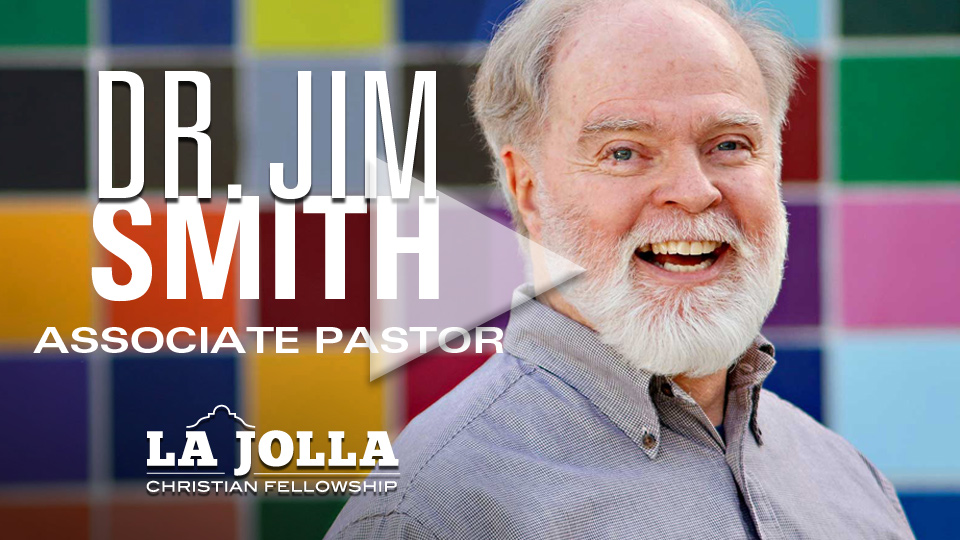
Two men go up on a roof and what happens next could not be more different. Dr. James Smith III sets 2 Samuel 11 beside Acts 10 and builds the message on the comparison.
On the first roof, David sees a woman bathing, sends someone to find out about her, and then sends messengers to get her. Nothing is revealed to him; he goes looking, and what he finds becomes the ruin of his household.
On the second, Peter goes up to pray around noon and falls into a trance. Something like a large sheet is lowered by its four corners, and what follows is a revelation he did not seek and initially refuses, three times, because it violates everything he understands about clean and unclean. That vision is what opens the church to the Gentiles.
The message's question is in its title. A roof is simply a high place with a view and some solitude, and what a person does there is not determined by the roof. One man ascends and looks outward at what he wants. The other ascends to pray and is given something he would never have asked for and did not want.
A guest message at La Jolla Christian Fellowship, August 2019.
Key topics:
- Two roofs, two very different ascents
- Going looking versus being shown something you did not want
- Peter's threefold refusal, and the vision that opened the church to the Gentiles
Podcast (sermons): Play in new window | Download
Read the Sermon Transcript
Sea Change Church · Guests · "What's Up On Your Roof?" Pastor Dr. James Smith III · August 11, 2019
Automated transcript. Not reviewed for accuracy.
Good morning, church. My name is Jade Connolly. I have a great husband who's outside and two kids in Cove Kids. And I also am the liaison for our missions partner. So if you have any desire to be involved in that, I'd love to meet with you. We have two scriptures this morning. The first is from 2 Samuel, chapter 11, verses 1 through 5. One evening, David got up from his bed and walked around up on the roof of the palace. From the roof, he saw a woman bathing who was very beautiful. And David sent someone to find out about her. The man said, Isn't this Bathsheba, the daughter of Eliam, and the wife of Uriah the Hittite? Then David sent messengers to get her. She came to him, and he slept with her. The second scripture is from Acts, chapter 10, starting at verse 9.
About noon the following day, as they were on their journey and approaching the city, Peter went up on the roof to pray. While a meal was being prepared, he fell into a trance. He saw heaven opened and something like a large sheet being let down to earth by its four corners. It contained all kinds of four-footed animals, as well as reptiles of the earth and birds of the air. Then a voice said, Get up, Peter. Kill and eat. Surely not, Lord, Peter replied. I have never eaten anything impure or unclean. The voice said to him, Do not call anything impure that God has made clean.
This happened three times, and immediately the sheet was taken back to heaven. While Peter was wondering about the meaning of the vision, the men sent by Cornelius the centurion found that house owned by Simon the tanner. The word of the Lord. One, so we just make this a special place. Very, very thankful. Privileged to be here this morning and always to enter into the act of worship, and this includes teaching. Pastor Adam asked if I would do the honors this morning. I'm Pastor Jim Smith, associate here at the church part-time.
Most of what I do is teach seminaries and graduate school, but wonderful to be here. And I'm going to gesture shamelessly. I'll get kicked in the shins later. This is my wife, Linda, over here. And some of you have not met her. She is a real deal. We have a picture. Is it okay to go there for a moment, Keith? Thank you. Yeah. We have a picture at home on our dresser of Linda and I in the late 60s at Disneyland. If you ever want to see a picture like that, let me know, and I may sneak it in some Sunday.
All right? But, yeah, very, very grateful. Often she's in children's ministry, and so this morning here, and that makes it special. With that, just to say, I am grateful for what Pastor Adam's recently been teaching. Remember the teachings that go back a good long ways. And with that, especially last week, there was a message that he gave. I'm going to slip on my grandpa glasses here. There was a message that he gave, which was entitled, Things that Pastor Adam Wants to Speak About.
And that's a one-sermon series. So, and this one was on David, and the emphasis was on Psalm 23. Some of us were here last time. And Psalm 23, marvelous hymn, marvelous psalm, rather, hymn as well, memorized by many people as one of two pieces they memorized from Scripture, even if they know nothing else, the Lord's Prayer and the 23rd Psalm. So, with that, he emphasized a passage there that I thought was really important about the need for us to be led by God in all ways in life, and also to know the value of taking a break, to know the value of break time.
One of the statements that he's made on a number of occasions is that a core value of this church family is not necessarily production, but it's fruitfulness. It's not drivenness. It is discovering moments, seasons, in which we can find rest. And that's faithfulness to God. So, he emphasized that this past week. I was touched by that. And in that, what I want to do is read a bit from his notes. Anybody else here take notes from the sermons?
We do a handout, and there's some of us that do, and you may or may not be led in that direction this morning. But I do. Actually, as I shared in the first service, and a couple people came up afterward and said, You're kidding. I said, Nope. I have sermon notes for Pastor Adam all the way back to the beginning of his ministry here. And am delighted by quotables, by things that are carry-out summaries of important issues, by insights, by wisdom.
Some of you know exactly what I'm talking about in that. And so, this is the sheet from last week. It's all over. It's got writing. And what I'm going to do is just read a few things, because I'd like the emphases that he's put on King David, the emphasis on his life, and especially as we look at the value of rest in the life of the God's person. And the question is, what do we do with our break time? What do we do with the times when we kind of air out?
Or get a change of pace? What's our goal? What's our priority? The texts this morning that we've read, I'm grateful for Jade reading those in such an affectionate way. I mean that. It's God's word. Those texts are going to illustrate, in the lives of two biblical heroes, if you will, King David, the Apostle Paul, Peter rather, the different emphases, the different tracks these break times can take. So, from last week's message notes, rest is one of our core values.
Another way to put it is, there is lots that we could do. What should we do? That was a preaching series of his back in 2014, that emphasis there. We live in a chaotic era. We live in an era in which we need to take a break and to hear God's voice. David, in fact, didn't do that well when he was in that incident described in the text we've read with Bathsheba. David had to learn to become a sheep. He had to rest in God.
Our culture says we should all be leaders all the time. That didn't work for David. There were times he needed to recognize his character as a follower, a follower of God, not just some list of to-dos. Some weeks ago, he said in the service, something that we had talked about those weeks ago, is this, as God continues to bless here at La Jolla Fellowship, as people come in, long-timers and newcomers being welcome, and as we are intergenerational, one of the beauties of this place is you look around you, and there are people of all different generations here.
And so with that, the question he was asking a few weeks ago, to echo what was mentioned last time around, is should we strategize for momentum, sustaining momentum? Shall we do certain things that will seek to sort of guarantee that there has continued to be that sort of growth? And what he came away with in waiting upon the Lord was the sense that that approach isn't the vital approach. The most crucial approach is that we respond to God's voice, and also we recognize the role of margin, room to breathe, elbow room, rest, in our pursuing God's plans and God's ways.
The message goes on and says, be careful of what you make a habit. The word habitus, an old Latin word. I'm sorry I teach church history. But the word habitus is where we live. Our habits grow out of where we live, where we pitch our tent. What we see is the core essence of life and of our living situations. And so what he went on to say as we close on this is that for what we look at every day, the day that the Lord has made, this is an open season.
The question is, what does the Lord say to his servant? Her servant. And in that, we follow the Lord in these particular ways. This morning, I want to build off of that a little bit with the text that we have here. And taking notes, just to emphasize, as your notes will say, that break times are important. We might call them a break, or airing out, or margin, or catching your breath, or to follow the word Sabbath, a sabbatical.
We might call it chilling out. Or as one of the members of Surf Church came up afterward, and they said, I love the message. It talks to me about rest. I said, look, he's wearing a Surf Church t-shirt. And I said, you go out in the water a lot, right? He says, yeah. He said, how do you tell the difference between catching the wave and sitting on the outside? Anybody know what I'm talking about there? Right? Between catching the wave and the moments where you paddle out beyond the waves, and you just sit on the board, and you just enjoy the beauty.
And he said, those are some of my sweetest times talking to God. When I just sit on the outside. I don't have to catch it. I don't have to worry about people dropping it on top of me. I just get to be out there and enjoy God's presence in a special way. It's all a gift. I love that. And so whatever we call it, these different phrases are important in saying whatever the routines or sometimes the ruts of our life may be, there are these important moments.
Now, I want to say it in a different way this morning. A number of us listened to the song that was on during the five-minute break. It echoes, if you will, the title of the message today. And it's called what? Up on the Roof. Carole King wrote that in the early 60s. It was recorded by a group called The Drifters. I had somebody elbow me and said, can you remember The Drifter? I said, yeah, yeah, they're great. Motown group and Soul group.
So The Drifters recorded it. Carole recorded it. James Taylor is the one that we listen to here. Up on the roof, I want to make a simple proposition. And that is, as we think at the break times in our life, in a sense, this is a perennial human need and especially a moment in life in which both David and Peter found themselves. There are up on the roof moments in which we can take a break, we can catch a fresh view, we can make new connections.
The question is, how do we use that break time? And so up on the roof is a phrase. Now, immediately, several of you who know me are going to say, okay, there's Dr. Smith and he went to graduate school at Harvard in church history. So what he's going to dwell on is the Hebrew meaning of the word roof. So the word gag is the Hebrew meaning of roof. Will you say that after me, please? What's the Hebrew meaning? Gag. All right, that's it.
So, sorry if it sounds like an English word, but you get the idea. The roof was the gag of the Hebrew life. To go up on the flat top of a building that you'd put together to get up and out. And I don't know if any of you have been in places where it's extremely hot. You need to get out of the house or else you'll become a fish fillet, right? And you need to get up on the roof and the breeze might be blowing there and you get some relief.
So we could talk about that, but we're not going to the Hebrew beyond what we just did. There's another Greek word and the Greek word for roof is doma. Any of you recognize an English root word in that? What's an English word that grows out of that? Domicile, domestic, right? Domain. So up there, you get a sense of where you live. And for neighbors who may be out on their roofs, they look over and they say, yeah, this person's or that person's house.
We're not going to dwell on the original languages. If you want to go further with that, we can. But where we want to go is the song because I think that song is a springboard into us understanding the moment in which David and Peter found themselves. Let me read the lyrics. I took a vow with Pastor Adam I would not sing in this service. Now, a few of you might remember a few other songs that I've sung. You know, including the one where people were converted by Jesus' miracles called I Saw the Sign.
All right? We're not going to go there. I got elbowed last week. You're going to preach next week. Can you sing? No, I'm not going to sing. I have to take a Nazarite vow. I'd have to shave if I sung. But I do want to read the lyrics. All right? And the lyrics go like this. When this old world starts getting me down and people are just too much for me to face, I climb way up to the top of the stairs and all my cares just drift right into space.
On the roof, it's peaceful as can be, and there the world below can't bother me. When I come home feeling tired and beat, I go up where the air is fresh and sweet. I get away from the bustling crowds and all that rat race noise down in the street. On the roof's the only place I know where you just have to wish to make it so. Up on the roof. This morning, the teaching is going to be a series of questions. On the roof's the only place I know where you just have to wish to make it so.
We could ask this morning, what are you wishing for? Because your life will follow that. What are you wishing for? Or in some of these other notes that are here, growing out of the text, we're going to look at that today. This is not only for people who work 50 hours a week. You can be retired and still need a break. You can be in retirement mode in certain ways and still say, I've got to catch a breath from this. I've got to step out.
I've got to reboot. I've got to calibrate again. So, whoever we are this morning, from the routines of life, what is the margin? What's the break? What's the breather that God may have us sense or plan in our schedule? Much like Pastor Adam and Carrie and the girls are up in the redwoods today. He not only preaches it, but he lives it. And I love that. One of many things to love about our brother, Pastor Adam. So, what does it mean for us today?
Let's step up and let's step into the notes here, into the text, if we may. And with that, underline that break times are vitally important, and not only for different figures, not only psychologically is it valuable, but for Jesus himself. Notice in the notes, before we get to David and Peter, that Jesus himself finds time to take breaks in his ministry. He goes up, for example, for a mountain, top experience, to pray.
The disciples chase him, and they say, everyone's looking for you. And Jesus said, I needed to come out to this place, and now we're going to go over there, because my heavenly Father has shown me that's why I came. Jesus asleep in the hull of a boat that's storm-tossed out there, Mark's Gospel says, asleep on a cushion. And in that, is he faking it? Is he making it so he's got one eye open, and he's kind of peeking at the disciples to see if they'll get terrified and beg for a miracle?
I think it's at least as likely he's exhausted. Anybody else here feel that there must have been times when Jesus, who is truly the human face of God, that Jesus just got tapped out. So no wonder he could sleep through a storm on a cushion like that. We have that example. Let's go to these two particulars that are illustrated by the text. As the song says, it can be to take a break, to catch a view. The question is, as David and Peter are both road-weary and go up on the roof, what are the responses, the choices that they're going to make?
And we find those choices illustrate very different paths. For David, in the book of Samuel, he is clearly choosing what Adam called recently a life beneath his calling. Not a life above his calling, or not a life that met God's vocation for him, but a life beneath. Can I go a cut below what God has for me? Can I just kind of cut a corner or claim that I'm the exception? I know God says this to other people, but I'm the exception.
One of my dear friends in ministry wrote a book called Follow Me. It's a book on discipleship, and in that he said the single largest challenge he faces in his church is exceptionism. Where people say, I know the Bible says this, but I'm the exception. I'm too tough for this. If I can speak personally just for a moment, my wife and I both have had family members who had a medical diagnosis, and instead of cooperating with medical care, instead of admitting vulnerability, they said, I'm too tough for this.
They were both younger than us. They've both passed. Exceptionism, he said, was the single biggest challenge in his church. I can get away with this. I can spend some nights. There's some days doing this kind of stuff or thinking in this way. So David, as we say in the text here, chose the path beneath his calling, and for him, up on the roof met a random escape. I'm going to go random. I'm going to do whatever hits me.
Fields open, floors open, put the values over here, park the values over here, and I'm just going to air out. For Peter, it was choosing to wise up, to meet his calling, and invite a prayerful time of a reboot. The stories, each of these, are longer. As it says in the notes, 2 Samuel, all of chapter 12 will describe, 11 and 12, some of the outcome. Acts chapter 11 will articulate what happens with Peter. Peter has been through it all.
Peter has been through his denying the Lord three times, but he got through it, and God still had his hand on his life. Peter got through the situation in which he disagreed with Jesus, and Jesus said, in those words that none of us want to hear, get behind me, Satan. Not good news. Peter has lived through situations in which he walks on the water, and then he starts staring at the waves, and he begins to sink. He's seen it all.
But there's Peter, all the more, with his vulnerability, not saying, I'm just going to air out and take a break. What Peter says is, Lord, I'm up on the roof. I'm going to pray to you. He'd seen it, and he was still attentive to God's way. Now, let me ask you a question. Do you ever whine to God? Do you ever whine? Yeah. Nobody's going to raise their hand. Amen? Amen. But there's enough recognition out there. People saying, oh, buddy.
Right? Or you got the sound. Yeah. David and Peter both had every right to whine. The question is not whether we start there. That's always a fine place to start if we need to. I don't know about this, Lord. I'm just so sick of this. I'm tired of obeying your word. I'm tired of being patient with this person. I just like to send him to the deep. Lord, I'm just... Right? That's a fair enough starting point for any of us.
The question is, as we listen to the Lord, as we seek him through his word and spirit, who gets the last word? What's decisive in our lives? And for Peter, who had all the right of being a road-weary traveler, he says, I'm still looking up. I am up on the roof. I'm taking a break. And I'm asking the Lord. And the Lord has a surprise for Peter. Because he is about to open, as the text says, his eyes to valuing every person.
Because each one is made in the image of God. And each one is beloved of God, as illustrated by Jesus' own sacrifice. sacrifice. So in that, Peter is continuing to broaden his view. And messengers are soon going to show up at the door that say, Peter, you've got a ministry that's not just going to be to Jewish people. I'm expanding your ministry. Let's go back to the text. You may or may not be taking notes. But in the texts themselves, please notice, at the top of the passage in 2 Samuel.
One evening, David got up from his bed and walked around where? Up on the roof. If you want to underline that, that's great, because it hops down to the passage in Acts 10. About noon the following day, as they were on a journey and approaching the city, Peter went up on the roof. They went up there to pray, in Peter's case, and to scope out his domain, in David's case. It says, while on the roof, back to 2 Samuel, from the roof, David saw a woman bathing that was very beautiful.
In Peter's situation, it says, he saw the heavens opened and these kinds of elements happening. So question number one is this. What's your vision? What is your vision? Because our vision is going to draw us in life directions inevitably up ahead. As the song Up on the Roof said, there is this sense of a whole new sphere opening up. What's your vision today? How would you answer that if someone asked you? What is it that you see?
What have you got your eyes on? Where are your affections being drawn? What's your sense of what a rewarding or a blessed future might be? Can we invite that question to be asked? Somebody after the first service said, thank you for the questions because these help me think again. These help me go up on my roof, as they said, and ask these questions of myself and address them to the Lord in examining and understanding my own soul.
What's your vision this morning? Peter and David, very, very different. Let's say it differently. Where's your heart? Behind their choices and ours is this foundational question. What is the great commandment? You shall love the Lord your God. Deuteronomy 6, echoed by our Lord Jesus. You should love the Lord your God with all your heart's affections, with all your soul's exertions, with all your mind's reflections, and with your whole strength.
A number of your whipping out pens and writing down the other words that go with heart, soul, and mind, and strength. Let me repeat that. You shall love the Lord your God with all of your heart's affections. You should love God with all of your soul's exertions. We've got soul. You should love the Lord your God with all your mind's reflections, and love your neighbor as yourself. Where's your heart? the texts say to us that David had become, with all the wear and tear of life, cold-hearted.
His affections were unattended. His life had become compartmentalized. That was something that Pastor Adam focused on a few weeks ago. The temptation for us to find that our life with the Lord is our religion department. That's the religion department of my life. And I've got other departments over here. I've got the economics, the business department, I've got the recreation department, the rec center, I've got all these other departments, compartments of my life.
And so, disconnect takes place, including a disconnect from the core values and the core blessing God intends by his word and by his spirit. David had become, may we say, compartmentalized, and his life was already becoming corrupted, polluted by that. And so, when David went up on the roof, he went up there to pray. Spell pray for me in David's case. P-R-E-Y. P-R-E-Y. He went up to pray. He had become, through the wear and tear, one who allowed himself to become a predator, to feed off the situations of others rather than feeding them, nourishing them.
When David went up on the roof, that was his direction. When Peter becomes a servant in community with his affections and thoughts before the Lord, he goes up to P-R-A-Y. He goes up to pray, to seek the Lord. Let me say very simply, a conviction of mine. There's a larger way I used to say it. I lectured for 17 years at USD, and we did a course called Christianity and its practice. And we talked about prayer among other things, and one of them is a simple statement I want to give you.
God doesn't need our information. You ever think of that? God doesn't need my information. But he loves the relationship that's created when we speak heart to heart. Nothing is news to God. But the relationship that's created as I go up on the roof, or as I'm out there on the streets, or wherever I am, and I pray to the Lord, that's what creates the communication. And that is what is so precious to God's own heart, as he invites that.
What's your vision? Where's your heart's? What's your heart's desire? And it could be the three wishes. It could be, if all of our hopes were fulfilled, it could be any number of things. But who do we find fit to love in that religion class at USD? I used to say, who do you have the biggest challenge loving, the up-and-outers or the down-and-outers? Ever think of it that way? Who do you have the biggest trouble with?
The ones that look like they are oh-so-goochy, and have it all totally together, and sometimes too much is not enough? Or the ones that you meet on the street corner? The ones that know how to make signs? The ones that are in various other life situations, whatever the borders of life are. How is it that it works? So, what we find is the heart there, is the question. Another way to put it, whose kingdom is it? We all live informed by our view of the world.
Sometimes that's a view of cultures, if you will. How does this work? How do we map? Whether it's our background with a genogram, or whether it's looking ahead at our calendars. We live by worldviews shaping our ways. God's people confess, yours is the kingdom. Yours is the power. Yours is the glory forever. The Lord's Prayer. Yours is the rain. Up on the roof, what did they see? And therefore, who was in charge? David saw his own realm, that he was the master of his fate, as the old poem goes.
I am the captain of my soul. And I'm also the captain, the leader, the earthly power, the status holder of this realm. And in that, there is automatic temptation. If it's all mine, if everything really should be good things flowing to me, then what is reasonable for me to exercise and make that option come true? Manipulation? Well, that's got a place. It's my kingdom. A life that commands or is run in itself by entitlement?
Yeah, that's a possibility too. David saw it as his realm. Peter saw God's reign. And this four corners vision, as Adam has often said, of God's creativity. Let's ask another question as we're drawing toward the close. Who is impacted? If in our lives we included, like we hope from the good people who build structures around us, environmental impact studies, who is it that is touched and affected by our lives, by our attitudes, by what we do on the roof, and by our life decisions?
You know, oftentimes we sell short the influence that we have. I want to say to each one of us, if I may, that there are words that you can share with those around you that can make or destroy their day. All I have to do is show snotty creativity. Hmm? All I have to do is kneecap somebody with my words, to use the football term. All I have to do is mock or demean or something like that. And it can wipe out a person's day or it can reinforce old stereotypes of who's in and who's out and who's worthy and who's not.
I just thank the Lord that he shows us a different path. And in that, then, we get to follow our Lord by saying who's impacted? We cause ripples. We leave legacies that go far beyond our immediate times. What's your environmental impact study in your life? where is the influence? Where are vital kinds of contributions that you can make? Whether it's in activity or inviting others to rest as well. So, these questions, the impact.
David abused royal power in adultery with Bathsheba, directing Uriah's death. Peter revealed the Spirit's power because an outsider was coming. Peter, good Jewish follower of Jesus, is about to open his heart to those who are Gentiles, to those who are outsiders. On the way already, because God was at work in the life of a military commander, a Gentile named Cornelius, and he's sending messengers to come and find Peter.
Already, there's a divine appointment that God has. So, Peter revealed the Spirit's power as an outsider came, and Cornelius' messengers will find an embrace. Pastor Adam asked the question last week, which voice will you follow? We don't have to be nutso to hear voices. Those messages form in our minds, do they not? We hear those appeals, those possibilities calling out to us. Which voices will we follow? The word vocation, the word calling itself, simply means what one has heard regarding the path they should take.
Our vocation is from the Lord. Ultimately, our choices in what voices we listen to and heed and respond to can make the difference in life, as your notes suggest, between a life of guilt and shame and fear, or long periods of those captivities, and on the other hand, cleansing and enfolding and love. Those are brackets that both reflect theology and psychology and culture. There are different paths. Which voices will we follow?
Now, as we draw toward the close this morning, let me summarize if I can. One of the things I love about this church, I said it in the first service, is that there's a bunch of thinkers here. Early on, Adam and I agreed this is a church where you should be able to ask questions. So I get some of, I tell people, some of the most amazing questions about theology. Where did that come from? What group believes this? What do Catholics say?
What do Orthodox say? How are we all on the same page confessing Christ as Lord? And we find that common mission. All these different elements that are out there. So some of you might say, okay, that's two roofs. That's David. That's Peter. Any other roofs? Sure. One more. If you're taking notes, mental or otherwise. How about Luke chapter 5? What's in Luke chapter 5? Anyone have it memorized? Nope. So, Luke chapter 5 is where three people show up where?
On a roof. And in that, there are two people who are carrying a man who's paralyzed. They can't get in to see Jesus face to face because of the crowd. There's just no room. So they go up on the roof. Maybe up on the roof just to say, Lord, what next? We don't know. But what do they wind up doing? Anyone? That's right. They saw a hole in the roof. And they let him down through the roof and Jesus sees him. And there's a healing.
That's a marvelous up on the roof. There are things that God will reveal to us that will draw us toward further action. It may sometimes be surprising. That's another roof. Someone might say, what about other music? So I'll mention very simply, Fiddler on the Roof. There is, in that marvelous classic movie, there is this image of someone in the midst of this Eastern European situation where the leader of the family named Tephia keeps asking God these questions and asking himself these questions.
And every time, I think, in the movie, one sees a fiddler on the roof, it's a cause for pause. It's a cause for him to break the run-on sentence of his life and to think about the deep things in life. So there's that. Some of you might even think of West Side Story. Anybody know that movie? The West Side classic, once again, so much of what happens in New York City in West Side Story, when people are saying, there's a place for us, somewhere a place for us, peace and quiet and open air, wait for us somewhere.
So much of that movie takes place on the rooftops of places in New York City. So we could go on and go further. Are there other word pictures? Sure. But let's bring it home, if we may. And that's this. These passages are not totally unfamiliar to us, I'm sure. But laying them side by side, may I say, this is the first time in my life, and I got a lot of miles on my odometer, this is the first time in my life I've ever seen these two passages up on the roof side by side.
And say, what did they see? What voices did they hear and listen to? How did it work for them? There's great lessons in this, and I hope these questions bless us as we do our spiritual retreats, as we take our moments and say, Lord, what do you say to your servant? How can I understand myself better so I can give more of myself to you in a full-on communicating way? What is it you have? So, with that, just to say, may the Lord guide us, and like Charles Schultz, any of you know the comic strip peanuts?
Right? Charles Schultz and he and his wife Joyce were very strong Christian people. I'm not sure if you know that. Charles Schultz, in 1985, wrote a book, You Don't Look 35, Charlie Brown. It was a reflection on a life of doing comic strips, and the messages behind them, one of the things he said is, I am amazed, I paraphrase, obviously, I'm amazed at how these old passages that I've marked can be seen in new ways. I can't always remember why it struck me in my marked Bible that this passage was powerful, but the Lord brings it back to me, the truth of his word, and I love it when I sense that.
I hope that this is part of it for us here together as we look at these familiar passages. God, bless your word to us, please. This morning and as the worship team comes, may we raise our voices to you. May we be attentive to you in all different ways. On the rooftops of our life and on the roadways, show us, Lord, your path. Show us your voice. Reveal to us your kingdom. And we thank you in Christ's name. Amen. In just a moment, there'll be a blessing, a surprise blessing, if we may.
All right? We're singing our prayer this morning and also we want to conclude with a blessing. We don't need a Stattmiller to give a blessing, but we're blessed by having one presence and because of her ministry, because of her heart, her counsel, her mentoring, her love for this church family, Virginia Stattmiller. Father, would you come? Amen? Amen? Good morning, church. It's an honor to pray with you this morning.
Would you extend your hands, please? Thank you, Pastor Jim, for that word this morning. I'll never think the same about a rooftop experience. I know that we've all had rooftop experiences, Father God, and we respond in different ways. I think of Peter, how he responded when the Holy Spirit spoke to him on that rooftop and changed his thinking. I think of King David when he let passion carry him away. And then I think of the Lord Jesus Christ when he was taken to the rooftop by the enemy and he was tempted and he quoted from the Old Testament the scriptures that he knew so well.
So, Father God, I pray for our congregation this morning. I pray, Father, for each one of us that we will have a special affection for the word of God and for having opportunities to share our life experience and how God has shown us favor with love and the blood of Christ that was shed for us, Father. I thank you for our church and for the difference we can make. I pray, Father, that we would be courageous warriors when we have an opportunity to share the stories of scripture and what Jesus has done in our lives.
May we never be hesitant when given the opportunity and may we regard prayer and the word of God and especially worship as a way of encountering an intimacy with Christ. For the scripture says when we worship the Lord Jesus Christ, we come immediately into his throne room because he sits on the throne of our praises. Now bless each one, Father, and thank you for all the blessings that you've shown us here in our little church on the corner, Lord.
And may we be effective for the glory of the Lord Jesus. And thank you for the word of God. And bless us all, Father, that we may show you how much we love you. In Jesus' name, amen. Amen. Amen. Amen. Amen. Amen. Amen. Amen. Amen. Amen. Amen. manifest.